
History of Laser Therapy
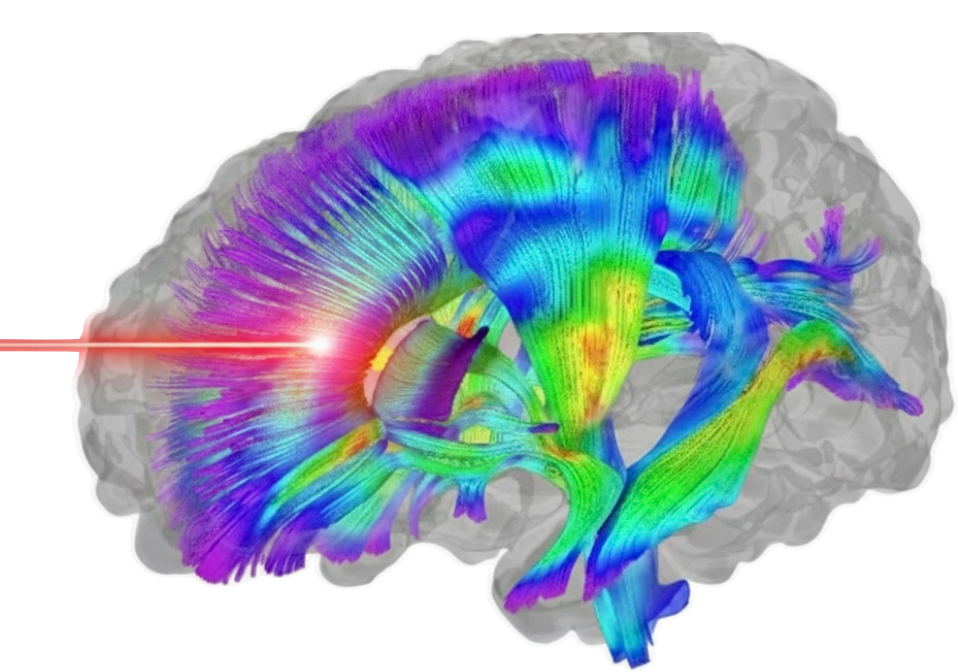
Photobiomodulation (PBM) grew out of two converging histories: millennia of therapeutic light
use (heliotherapy/photomedicine) and 20th‑century laser physics, with PBM itself emerging
in the late 1960s through Endre Mester’s low‑power ruby laser work.pmc.ncbi.nlm.nih+1
Below is a streamlined, chronologically ordered milestone list using the Hamblin history
you provided, framed specifically toward modern PBM/LLLT.
Ancient to 19th century light therapy
~1400 BC – Therapeutic sunlight in India
Atharva Veda describes treating depigmented skin (vitiligo, then considered leprosy)
by giving plant extracts and exposing patients to sunlight.pubmed.ncbi.nlm.nih
18th century – Early “case reports” of sun as medicine
1735: Fiennius reports curing a cancerous lip lesion with sunbaths.
1774: Faure reports healing skin ulcers with sunlight.
1776: LePeyre & LeConte use sunlight concentrated through a lens to accelerate wound healing and destroy tumors.pubmed.ncbi.nlm.nih
Late 18th–mid‑19th century – Internal disease and infection
1782: Harris uses sun‑exposed mollusk shells in rickets.
1845: Bonnet reports sunlight treatment of tuberculous arthritis.pubmed.ncbi.nlm.nih
Late 19th–early 20th century photomedicine
1855–1877 – Heliotherapy and antimicrobial light
1855: Rikli opens a heliotherapy clinic in Veldes (now Bled, Slovenia), formalizing graded sun exposure as therapy.
1877: Downes & Blunt accidentally discover that sunlight kills bacteria in sugar solutions, demonstrating germicidal effects of light.pubmed.ncbi.nlm.nih
1880s – Sunlight and rickets
Theobald Adrian Palm links rickets in smoky Edinburgh versus near‑absence in sunnier Japan, anticipating the later vitamin D–sunlight connection.pubmed.ncbi.nlm.nih
1893–1903 – Finsen and modern phototherapy
1893–1895: Niels Ryberg Finsen uses filtered arc‑lamp light (short‑wave “chemical rays”) to treat smallpox and lupus vulgaris, essentially founding scientific phototherapy.
1903: Finsen receives the Nobel Prize in Physiology or Medicine for light treatment of lupus vulgaris.drphilharrington+1
1900–1940 – Alpine heliotherapy for TB and wounds
Early 1900s: Oskar Bernhard and Auguste Rollier develop structured heliotherapy in Swiss mountain clinics for bone/joint tuberculosis and chronic wounds, using staged body exposure to high‑altitude sunlight and fresh air.drphilharrington+1
1917–1960: Physics foundations and invention of the laser
1917 – Stimulated emission theory
Albert Einstein publishes “Zur Quantentheorie der Strahlung,” introducing spontaneous and stimulated emission, the theoretical basis for masers and lasers.ipa
1954–1955 – First MASERs
1954: Townes, Gordon, and Zeiger build the first ammonia maser (Microwave Amplification by Stimulated Emission of Radiation).
1955: Prokhorov and Basov independently develop masers in Moscow.ipa
1957–1958 – Visible‑light laser concept
Townes and Schawlow propose an optical maser using a Fabry–Pérot resonator (mirrors at each end), defining the modern laser cavity design.
Gordon Gould coins the term LASER (“Light Amplification by Stimulated Emission of Radiation”) and records the basic laser concept in his notebook.openmedscience+1
1960 – First working lasers
May 16, 1960: Theodore H. Maiman operates the first ruby laser (694 nm) at Hughes, generating pulsed coherent red light.
Late 1960: Sorokin (solid‑state CaF₂:U) and Javan (HeNe gas laser) demonstrate additional laser types; by year’s end, three distinct laser platforms exist.dermatologytimes+1
1960s: Lasers meet medicine
1961–1965 – Early laser surgery and dermatology
Leon Goldman at the University of Cincinnati studies laser effects on skin, including tattoo removal and “bloodless surgery” concepts, becoming known as “Father of Laser Medicine.”jkslms+1
Early 1960s: Paul McGuff and colleagues use lasers to vaporize transplanted cancer cells in animal models and in human tumors, pioneering oncologic laser surgery.ipa
1965–1967 – Serendipitous discovery of laser biostimulation
Hungarian surgeon Endre Mester at Semmelweis University attempts to replicate McGuff’s tumor‑destruction experiments with a ruby laser.
Because his custom laser is much lower power than intended, it fails to destroy tumors but unexpectedly:
Accelerates healing of surgical incisions in rats.
Speeds hair regrowth on depilated skin.optica+2
1967–1969 – Birth of LLLT / PBM
1967: Mester reports enhanced wound healing and hair regrowth with low‑power ruby laser, the first recognized “low‑level laser” tissue‑stimulation effect.pbmtherapyclinic+1
1968: He publishes studies on the stimulating/inhibitory (“biphasic dose response”) behavior of laser beams on biological systems, introducing the idea that dose matters in both directions.pmc.ncbi.nlm.nih
Late 1960s: The concept of “laser biostimulation” enters the literature as separate from thermal/ablative laser surgery.drphilharrington
1970s–1990s: Consolidation of LLLT as a field
1970s – Experimental and early clinical LLLT
Mester and collaborators publish multiple studies on:
Wound healing acceleration (preclinical and clinical).
Regeneration of muscle fibers.
Treatment of skin necrosis and chronic ulcers.energy-laser+1
1971: Mester receives a Scientific Doctorate from the Hungarian Academy of Sciences for his laser biostimulation work.pmc.ncbi.nlm.nih
1970s–1980s – Spread to surgery, dermatology, physical medicine
Low‑power red and near‑infrared laser devices begin to be used in Europe, the USSR, and parts of Asia for musculoskeletal pain, wound healing, and nerve injuries, typically under labels such as “laser biostimulation,” “soft laser,” or “cold laser.”environmentalphysio+1
Coherent lasers dominate early devices; coherent versus non‑coherent efficacy remains an open debate.pmc.ncbi.nlm.nih
1980s–1990s – Expansion and terminology proliferation
Applications diversify into physiotherapy, sports medicine, dentistry, and veterinary medicine.environmentalphysio+1
Dozens of terms are adopted worldwide: low‑level laser therapy (LLLT), low‑reactive‑level laser therapy (LLLT), cold laser, soft laser, biostimulation, and others, creating confusion in literature retrieval and regulation.optica+1
2000s–present: From LLLT to “photobiomodulation”
Early 2000s – Mechanisms and evidence base mature
Cellular mechanisms (e.g., mitochondrial chromophores, nitric oxide signaling, ROS/antioxidant balance, gene transcription shifts) are increasingly characterized, supporting a photochemical modulation model rather than heating.ipa+1
Clinical literature grows rapidly across pain, wound repair, neuropathies, brain injury, and neurodegeneration, including RCTs and systematic reviews.pmc.ncbi.nlm.nih+1
mid‑2000s–2010s – Standardizing the name PBM
Recognition that:
Lasers are not strictly required—LEDs with similar wavelengths/irradiance can produce equivalent biological effects.
“Low‑level” is vague and sometimes inaccurate (higher powers with appropriate dosimetry are beneficial).
Both stimulation and inhibition can be therapeutic.pmc.ncbi.nlm.nih+1
Consensus emerges to adopt photobiomodulation (PBM) or photobiomodulation therapy (PBMT) as the preferred term, describing non‑thermal modulation of cell function by visible/near‑infrared light.pubmed.ncbi.nlm.nih+1
2016 – Hamblin’s Handbook of Low‑Level Laser Therapy
Publication of the Handbook of Low-Level Laser Therapy (Hamblin et al.) compiles mechanisms, in vitro/in vivo data, veterinary and clinical applications, and adopts PBM as the modern umbrella term.taylorfrancis+1
2010s–2020s – PBM as an established modality
Thousands of PBM/LLLT papers are indexed, including hundreds of RCTs and systematic reviews across musculoskeletal, neurological, dental, dermatologic, and veterinary indications.pmc.ncbi.nlm.nih+1
Device landscape expands from small class 3B/4 lasers to multi‑diode LED arrays, full‑body panels, and helmet/cap systems for CNS applications, with ongoing work on optimal dosimetry and treatment protocols.taylorfrancis+1
Anchor milestones for a PBM teaching slide
If you want a crisp “headline” chronology for training decks:
1400 BC – Sunlight therapy in Atharva Veda (India).pubmed.ncbi.nlm.nih
1893–1903 – Finsen’s arc‑lamp treatments of lupus vulgaris; Nobel Prize establishes modern phototherapy.drphilharrington+1
1917 – Einstein formulates stimulated emission.ipa
1960 – Maiman’s first ruby laser (694 nm).openmedscience
1961–1965 – Goldman and McGuff: early laser surgery and dermatologic applications.dermatologytimes+1
1967 – Endre Mester observes enhanced wound healing and hair regrowth with low‑power ruby laser in rats: birth of LLLT / PBM.pbmtherapyclinic+1
1970s – Mester’s clinical wound‑healing and muscle‑regeneration work; “laser biostimulation” spreads.energy-laser+1
1980s–1990s – Global expansion into pain, rehab, and veterinary uses under multiple names.environmentalphysio+1
2000s – Mechanistic clarity (mitochondria, NO, ROS, gene expression) and growing RCT/meta‑analysis base.pmc.ncbi.nlm.nih+1
mid‑2000s–2010s – Field converges on the term photobiomodulation; LEDs accepted as equivalent to lasers when dosimetry is matched.optica+1
2016+ – Hamblin’s handbook and subsequent reviews cement PBM as a distinct, evidence‑supported therapeutic domain.pubmed.ncbi.nlm.nih+1
If you like, a next step can be building a one‑page visual timeline you can drop directly into VALERIS slide decks or protocols.
https://environmentalphysio.com/2024/04/18/the-history-of-light-therapy/
https://openmedscience.com/milestones-in-medical-laser-development-key-discoveries-and-innovations/
https://www.dermatologytimes.com/view/history-aesthetic-lasers
https://www.jkslms.or.kr/journal/view.html?doi=10.25289%2FML.2017.6.2.45
https://api.pageplace.de/preview/DT0400.9789814669610_A28523466/preview-9789814669610_A28523466.pdf
https://scholar.google.com/citations?user=PY1YToQAAAAJ&hl=en
https://onlinelibrary.wiley.com/doi/abs/10.1002/9781394205356.ch1
https://www.westtowndentalcare.com/history-of-laser-light-therapy-for-acute-and-chronic-pain/
https://www.pagepressjournals.org/vl/article/view/11821/11791